Insights
The Grand Canyon hike started months before I reached the trail
October 2026

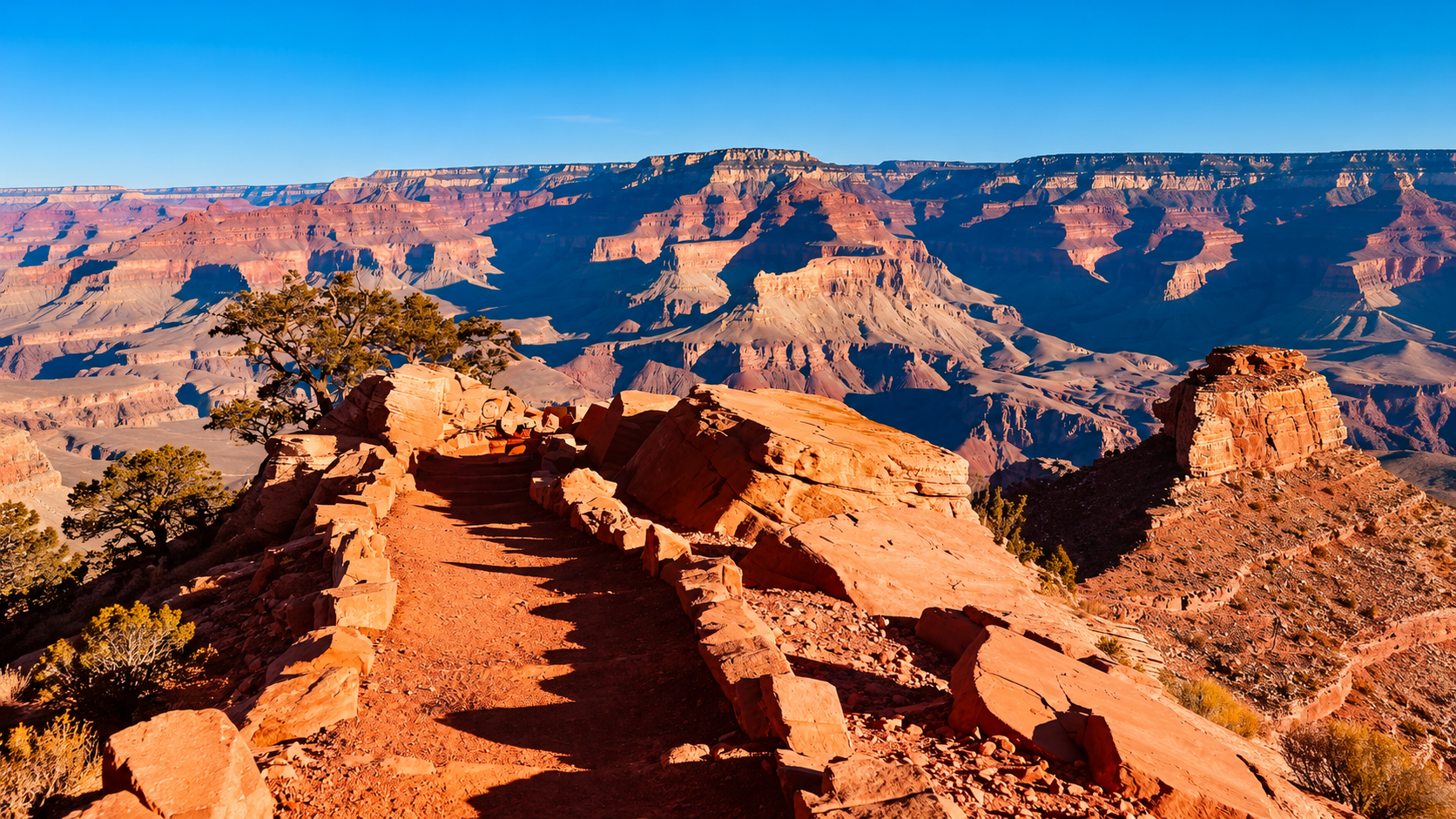
Several months ago, I had the incredible opportunity to hike the Grand Canyon. Our route took us down South Kaibab, across the Tonto Trail, and up Bright Angel. Roughly 15 miles, with a 4.5-mile climb out and 3,268 feet of elevation.
But the work of getting there started months before I stepped onto the trail.
I often approach a challenge through backward design. Once I understand what needs to happen and when, I work backward to figure out what it will take.
Preparing for this hike was no different. We had a date and a route. I knew the distance and elevation would require more than enthusiasm. I needed a plan that would help me arrive prepared.
I researched local trails, comparing their mileage and elevation changes. I planned how to build from shorter hikes to longer ones with more climbing. Then came the part a plan alone couldn’t accomplish: getting up and doing the work.
Thankfully, I had a very enthusiastic training partner. Jess, my pup, wasn’t going to hike the Grand Canyon with me, but she was certainly part of my motivation to get out early and onto the trails.
Those hikes helped me prepare physically. They also gave me practice working through the mental side of a challenge. Each one was an opportunity to build the determination I would need for the hike ahead.
Still, months of preparation couldn’t fully prepare me for the moment I stood on South Kaibab looking out over the canyon.
It was vast, beautiful, and almost impossible to take in. I felt inspired and humbled. And as I began descending, with those 15 miles ahead of me, some insecurity and doubt started to creep in.
I was grateful to have two very good friends beside me. Their encouragement helped keep me grounded—literally, too!
There is another story to tell about the experience inside the canyon. But what stays with me here is how much meaningful work happens before we reach the starting point.
The same is true when we launch a program, introduce a change, or take on a major organizational initiative. Setting the goal matters. So does understanding what people will need to be ready for it.
Working backward helps me ask better questions:
Time: What needs to happen before the launch, and have we allowed enough time for it?
Practice: What will people need to try, learn, or rehearse before we expect them to do it confidently?
Resources: What tools, information, and capacity will the work require?
Support: Who can help people prepare, work through uncertainty, and keep going?
Those questions can change the plan. They may reveal that we need to start earlier, narrow the scope, create opportunities to practice, or bring someone else into the work.
Preparation didn’t remove every doubt I felt at the canyon. It gave me experience to draw on when doubt showed up. And the people beside me helped me keep moving.
As leaders, we have an opportunity to build that kind of readiness with our teams. We can connect the work to a purpose that matters, give people time to prepare, and make sure support is available along the way.
Not every major initiative is a Grand Canyon hike. But every one deserves thoughtful preparation.
Think about an important goal ahead of you. If you work backward from that moment, what needs to happen now—and who needs to be part of the preparation?
Let's continue the conversation.
Get in touch